For Norwegian technical distributors
From your customer’s words to your catalogue.
The distributor agent is not built yet. We want to build it with a few Norwegian suppliers.
Bearings, power transmission, hydraulics, seals, fasteners, MRO supplies: your customers order them by email, in their own words, with their own item numbers and a spec attached. A Perdika agent pulls out what each line states, with its source, and asks about the rest. Your team approves.
No data needed for the call.
As it arrivedToday, 08:14
Hei,
Kan dere gi pris på:
12 stk UCP 205
40 stk kulelager 6205-2RS C3
lager 6206, samme type som sist
og nytt transportbånd etter vedlagt spesifikasjon
Mvh, Kari
spesifikasjon-transportbånd.pdf
Matched to your cataloguePrices from your price list
| Requested | Catalogue item | Qty | Price | Status |
|---|---|---|---|---|
| 12 stk UCP 205 | UCP 205Pillow block bearing unit, 25 mm bore | 12 | kr 312,00 | Matched |
| 40 stk kulelager 6205-2RS C3 | 6205-2RS C3Deep groove ball bearing 25×52×15, rubber seals, C3 clearance | 40 | kr 48,50 | Matched |
| lager 6206, samme type som sist | 6206Deep groove ball bearing 30×62×16. The seal type is not stated: 2RS or ZZ? | – | – | Ask the customer |
| nytt transportbånd etter vedlagt spesifikasjon | Made to measureA belt to the attached spec, 2 pages | 1 | your team prices | To price |
The problem, and the service
Few requests arrive in your catalogue’s terms.
Before a line can be priced, someone on your team reads the email and its attachments, works out what the customer means and finds it in your catalogue. These are the requests that take the time, and the reading the draft would do first.
12 stk UCP 205, og nytt transportbånd etter vedlagt spesifikasjon.spesifikasjon-transportbånd.pdf12 pcs UCP 205, and a new conveyor belt to the attached specification.
TodayOne email, two kinds of line. The bearing units are in your catalogue. The belt is made to measure from the spec.
The draftUCP 205 found in your catalogue, 12 pcs at your price. The belt becomes a made-to-measure line with the spec attached, for your team to price.
40 stk kulelager 6205-2RS C340 pcs ball bearings 6205-2RS C3
TodayTranslate the trade term, then find the bearing in your catalogue with the right seals and clearance.
The draft6205-2RS C3 found in your catalogue, its seals and clearance checked against the datasheet. 40 pcs at your price.
lager 6206, samme type som sistbearing 6206, same type as last time
TodayThe seal type isn’t stated. Someone has to notice, and ask the customer: 2RS or ZZ?
The draft6206 found; the seal type is a gap, so the draft carries the question for the customer, 2RS or ZZ, and your team sends it.
vår art.nr. VR-SPZ1000, 12 stkour item no. VR-SPZ1000, 12 pcs
TodayThe customer uses its own item number, which has to be traced to one of yours.
The draftVR-SPZ1000 is not in your catalogue, so the draft flags the line and asks your team which item it is.
reservedeler-linje-3.xlsxA spare-parts list with 64 lines
TodayEvery line is matched, checked and typed into the quoting system, one at a time.
The draftEvery line read from the spreadsheet: the ones found in your catalogue listed with their price, the unsure ones flagged for your team.
Examples, written the way customers write them, with what the draft would return for each.
The lines your team approves go into your ERP as a quote or an order: a file it imports first, a connection in the pilot. Your corrections go into the next draft.
Who it fits
The requests decide the fit.
Being a distributor isn’t enough on its own. It fits when your team still reads, finds and retypes each line.
- Requests mix catalogue items with made-to-measure lines, specs or drawings.
- Customers write in their own words or use their own item numbers.
- Spare-parts lists, bills of quantities and purchase orders arrive as spreadsheets or PDFs, and someone retypes every line.
- Your team handles these by hand every week.
- You can share your catalogue and price lists for a test.
Not a fit: requests your webshop, EDI or ERP already handle well.
Our experience
Where our experience comes from.
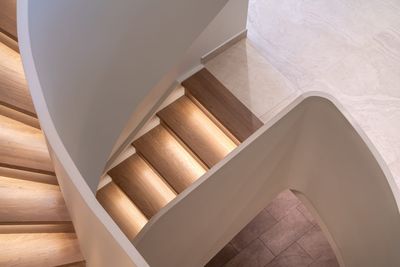
Perdika’s quoting core has run at LHM Step, a staircase factory, since May 2026. There, no agent sets a price or writes to a client. Every value has a source, and people approve. Its results describe staircases, not catalogue requests.
How we start
Start with one agent.
Add the next with evidence.
Three steps to the first agent. After each one, you decide whether to go on. A setup fee and a monthly fee for each agent. The audit is priced separately and agreed before it starts.
Step 1A 20-minute call
No data needed.
Step 2A test on your data
Your requests. Your catalogue.
Then, if you want more: a workflow audit and the next agents, one at a time.
Talk to us.
On a 20-minute call, show us the work your team still does by hand. We tell you straight whether there is enough of it for an agent, and which workflow to start with.
Book a 20-minute callNo data needed for the call. Anything you share later is covered by a data agreement.
- Founder
- Matas EimutisOslo, Norway
- Reference
- Morta Pivoraitė-ŠimkuvienėCEO, LHM Step · reference on request